We’ve got a few updates to share from the last few months. Braxton has been working with Joey Takeda, a developer in the SFU Digital Humanities Innovation Lab, on standardizing and systematizing our files and schema. Meanwhile, we have been extending our work on network analysis for a keynote address at the International Dostoevsky Symposium in Buenos Aires, Argentina, later this month.
For our talk, we will be discussing the novel Demons. We have been working all spring on speech network graphing the novel, its parts and some of its chapters and scenes. We’re interested in connecting character speech network patterns to genre. We trace how the genres that Dostoevsky seems to be introducing at the beginning of the novel are associated with particular speech network patterns. We’re also interested in how the shape of the speech networks change over time as the plot unfolds. We can see Pyotr Verkhovensky’s manipulations of characters and situations reflected in the network shapes.
Here are the three parts of Demons in speech network graphs:
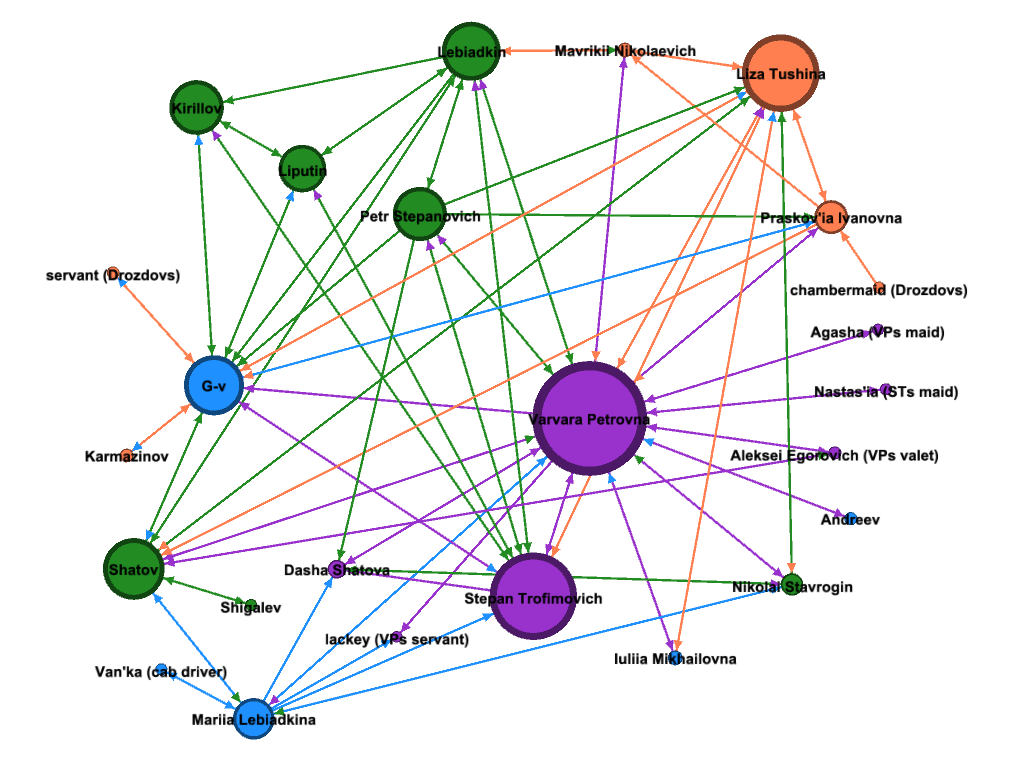
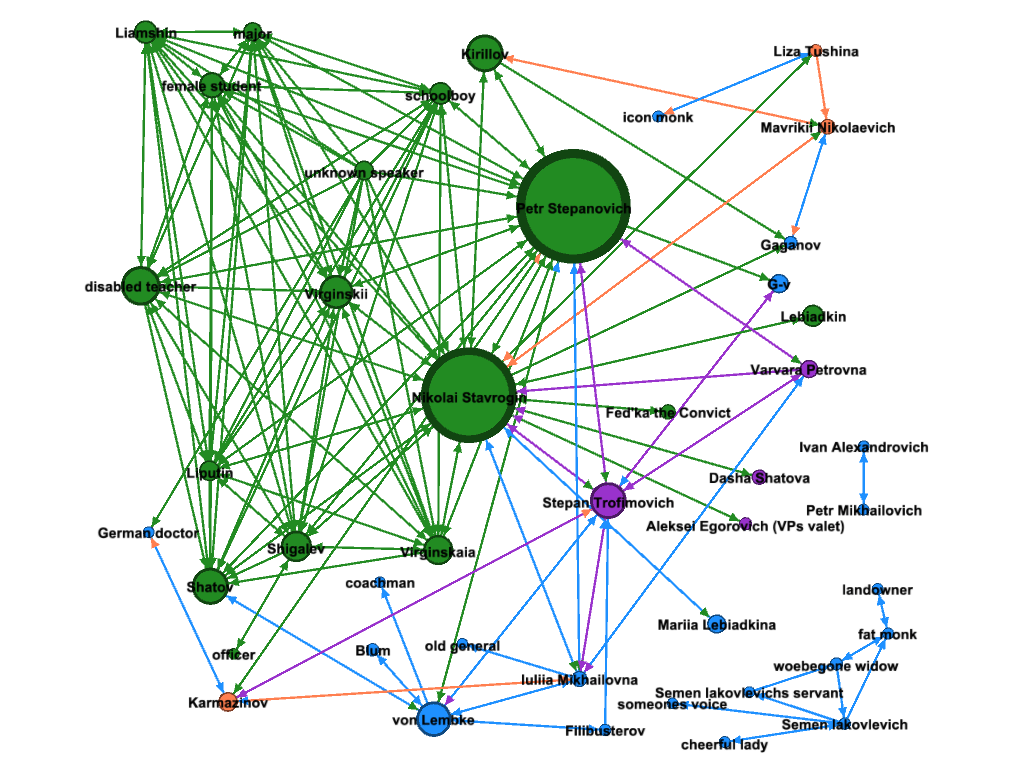
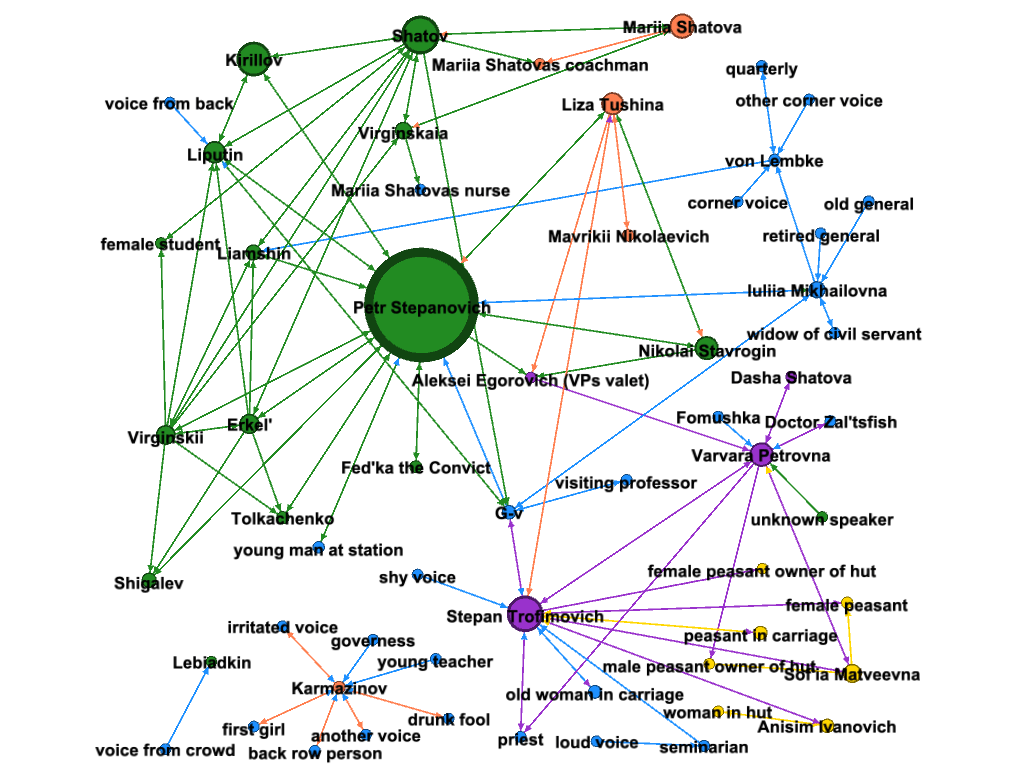
It’s interesting to see how these patterns shift across the novel, which characters rise to prominence and which retreat. On these graphs, node size represents that character’s volume of speech relative to that of other characters. We have coloured different groups of characters in order to see how the groups interact across the novel. The green part of the network represents the group of conspirators.
This is just a taste of what we’ve been up to, but the full analysis will be available in our book, eventually, and, in the meantime, if you’re at the IDS next week, come hear our talk! It’s during the morning session on Wednesday. Hasta pronto!


Pingback: The Novel without its Hero: More Adventures in Network Analysis | Digital Dostoevsky